
LipoSuction
| Am I a good candidate for liposuction? | |
| Any one or combination of the following conditions may indicate that you are a good candidate for liposuction surgery: | |
 |
Areas of fat deposits that are out of proportion with the rest of your body and do not go away with diet and exercise so called “diet resistant fat” |
|
Areas with minimal amounts of excess skin (Liposuction removes fat not skin) and good skin elasticity |
| Liposuction surgery may be considered to treat areas of excess fat in the stomach, buttocks, hips, love handles, saddlebags, thighs, calves, ankles, breasts (including male breast enlargement), back, arms and neck Liposuction is equally effective in both men and women. | |
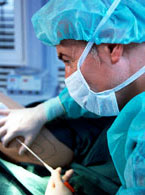
Liposuction surgery usually improves contours. In some instances it may be used in a circumferential fashion, thinning an area. Since the healing process is gradual, you should expect to wait at least several months to get an accurate picture of the results of your surgery. The small incisions used for access of the instrument known as a cannula, will fade over a number of months usually becoming barely visible.
The results of liposuction surgery are usually long lasting, but they may be affected by weight gain, aging, pregnancy and lifestyle factors.
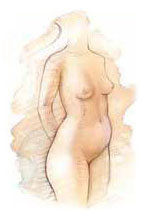
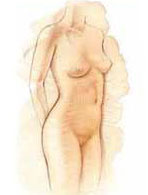
Your Personal Consultation How will my plastic surgeon evaluate me for liposuction surgery?
 |
|
|||||||||||
|
 |
|||||
 |
|
|||||||||||
Pre-Operative
The goal of your plastic surgeon and the entire staff is to make your surgical experience as easy and comfortable for you as possible.
If you are a smoker, it is recommended to stop smoking well in advance of surgery since smoking can impair the healing process. Certain medications that increase the risk of bleeding such as Aspirin, non-steroidal anti-inflammatory medications, and some vitamins/homeopathic regimens should be discontinued before undergoing liposuction surgery. Your surgeon will provide you with additional preoperative instructions.
Liposuction surgery is usually performed on an outpatient basis. If this is the case, be sure to arrange for someone to drive you home after surgery and to stay with you for the next 24 hours. If you are undergoing large volume of liposuction, it may be suggested that you be hospitalized even for one night.
Your liposuction surgery may be performed in an accredited hospital, free-standing ambulatory facility or office-based surgical suite.
Medications are administered for your comfort during the surgical procedure. Frequently, local anesthesia and intravenous sedation are used for patients undergoing liposuction surgery, although general anesthesia may be desirable in some instances. For your safety during the operation, various monitors are used to check your heart, blood pressure, pulse and the amount of oxygen circulating in your blood.
When surgery is completed, you will be taken into a recovery area where you will continue to be closely monitored. You will most likely be wearing a compression garment, usually used to help “shrink” the skin. Concerning postoperative pain, many patients state that the area feels sore, as if they underwent a vigorous work out.
You probably will be permitted to go home after a short period of observation, although some patients may stay overnight in the hospital or surgical facility.
It is important to realize that the amount of time it takes for recovery varies greatly among individuals.
The first few days after surgery, you should rest quietly. If you can elevate the body part, it is usually suggested that you do so. Remember, you must not take aspirin or certain anti-inflammatory medications. You most likely will wear a garment. If it is too tight you should promptly notify your surgeon.
During the first 48 hours following surgery, patients experience varying degrees of swelling and bruising. The swelling persists longer. Bruising typically disappears within seven to ten days. Stitches are usually removed within a week of surgery.
Straining, bending over and lifting should be avoided during the early postoperative period. In many instances, you will be able to resume most of your normal activities within ten days or less.
Cost is always a consideration in elective surgery. Prices for liposuction vary widely, and are often dependent on the surgeon’s experience and the geographical location.
| The fees are often broken down into several components: | |
|
Surgeon’s professional fee |
|
Facility fee |
|
Anesthesia fee |
|
Medications |
|
Surgical garments |
|
Medical tests |
Maintaining a Relationship with Your Plastic Surgeon after Liposuction
You will return to your plastic surgeon's office for follow-up care at prescribed intervals, at which time your progress will be evaluated as a result of your liposuction surgery.
Please remember that the relationship with your plastic surgeon does not end when you leave the operating room. If you have questions or concerns during your recovery from liposuction surgery, or need additional information at a later time, you should contact your plastic surgeon.