
Permanent Methods
Over 40% of couples in Australia rely on sterilisation as their preferred method of birth control. Women are more likely than men to have a procedure performed. Before undergoing a sterilisation procedure it is important that you understand that it is intended to stop you from having any more children forever. Although some of the procedures can be reversed and IVF may be an option in some cases, the success rate of these procedures are around 50% and they are very expensive.
There are 3 forms of permanent contraception available.
Vasectomy
This is the male form of permanent contraception. It involves a minor operation usually performed under local anaesthetic. Two small cuts are made in the skin either side of the scrotum. The tube that carries the sperm from the testicles to the penis, the vas deferens, is picked up and ligated (blocked). Stitches are then used to close the skin of the scrotum. As sperm are usually located up stream from where the surgery is performed your partner will have to have one or two semen analysis performed over the following months. When they are negative you can rely on the vasectomy for sterilisation. Current research suggests that vasectomy does not lead to an increased risk of health problems such as prostate cancer or cardiovascular disease.
| Advantages of Vasectomy |  |
|
 |
Performed under local anaesthesia | |
|
Rapid recovery and return to work | |
|
Low risk, minor complications include bleeding and infection (risk 4%) | |
| Disadvantages of Vasectomy | ||
|
Failure rate 1/1000 | |
|
3 - 4 month wait before it can be relied on | |
|
Ongoing testicular discomfort after the procedure (risk 6%) | |
Laparoscopic Sterilisation
This is one of the 2 forms of female sterilisation. It involves an operation under general anaesthetic. Once cleaned with disinfectant and covered with drapes, your bladder is emptied and a device is placed in your vagina so that we can move your uterus. Two small incisions are made in you abdomen, one near your navel and one in your lower abdomen. A specially designed titanium and plastic clip is placed on both fallopian tubes. This clip crushes a small portion of the tube, which eventually resorbs. The tube is then effectively cut in two. Once the clips are in place the egg is unable to travel along the tube to be fertilised by the sperm. The egg is microscopic and will eventually die and is removed by the body. Laparoscopic sterilisation does not effect ovulation, hormones, libido or your periods, although menopause may start 1 or 2 years earlier. Reversal is possible but expensive. It involves cutting the tubes and stitching them back together. At best the success rate is around 50%.
Advantages of Laparoscopic Sterilisation
Can be relied on as soon as you have your next period Laparoscopy can be used to investigate other problems you may have.| Disadvantages | ||
|
Failure rate 3/1000 | 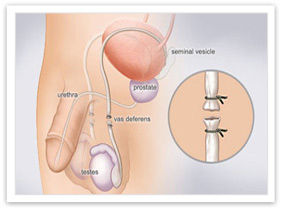 |
|
Major complications are possible, including: | |
|
damage to internal organs particularly bowel, haemorrhage and thrombosis (blood clots) (risk 1:1000) | |
|
Death (risk 1:25,000) | |
|
Admission to hospital (risk 3%) | |
|
Laparotomy (large incision) required due to difficulty (risk 1%) | |
|
Abnormal scar formation (keloid) and other minor complications (risk 4%) | |
This is the newest form of female contraception. It has been available in Australia since February 2001. As it is new some long term or unusual effects may not be known.
Essure is a low risk procedure performed under local anaesthetic. You can watch the procedure being performed on a video monitor. The procedure usually takes less than 10 minutes.
You are positioned with your legs in foot rests and a speculum is placed in your vagina just as you have a smear performed. After cleaning the cervix local anaesthetic is inserted either side of the cervix. A small telescope is passed through your cervix and into the womb. The opening of both tubes are identified and the uterus checked for abnormalities. The Essure device, a titanium nickel and stainless steel micro coil, is passed through the telescope and placed in the first part of each fallopian tube. The device springs open to stay in place and the telescope is removed.
Over the next 3 months the device causes tissue to grow and block the first part of the fallopian tube. This reaction is very localised.
After 3 months an x-ray is performed and if the devices are in a satisfactory position you can stop alternative contraception (after discussion with your gynaecologist).
The Essure devices do not effect ovulation or your hormones. Although 3% of women complained of menstrual changes this may be no different to any one stopping the contraceptive pill.
| Advantages of Essure | ||
|
Performed under local anaesthetic | 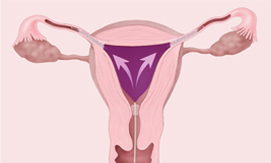 |
|
Rapid recovery and return to work | |
|
No incision or stitches required | |
| Minor complications include | ||
|
Bleeding (risk 3%) | |
|
infection and uterine or tubal perforation (risk <1%) | |
| Disadvantages of Essure | ||
|
Failure rate 2 in 1000 women | 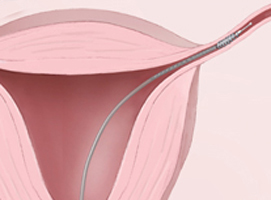 |
|
3 month wait before it can be relied on | |
|
Not reversible and IVF may be less successful | |
|
It may restrict the use of some intrauterine operations | |
|
Inability to place one or both devices in 2% of women | |
Thankyou for taking the time to read this information sheet. It has been provided to help you choose the type of permanent contraception that suits you. There may be other risks involved with a particular procedure so please discuss your chosen option with your doctor. If you have any reservations about ending your reproductive ability please discuss these with your doctor. There are new medium term reversible contraceptives to which you may be more suited.
Tel : 022 - 26372083